
Government Of India
A-
A
A+

Latest insights & developments from the world of Artificial Intelligence(AI).

architecture
automation
Deep learning
Neural Networks
Neural Architecture Search : Principles, Algorithms, Applications and Future Directions
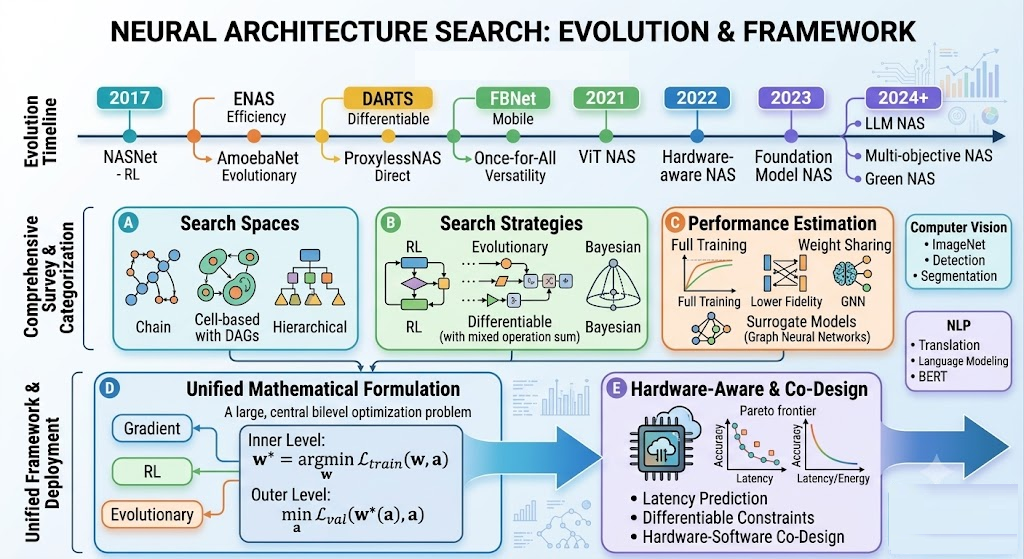
Neural Architecture Search has emerged as a transformative paradigm for automating the design of deep neural networks, reducing the reliance on human expertise and enabling the discovery of architectures that often surpass manually designed counterparts. This paper presents a comprehensive survey of NAS methodologies, tracing the evolution from early reinforcement learning-based and evolutionary approaches to modern differentiable and one-shot methods. The paper systematically categorizes NAS techniques along three fundamental dimensions: search space design, search strategy, and performance estimation. A unified mathematical framework is introduced that encompasses gradient-based, reinforcement learning-based, and evolutionary NAS under a common optimization objective.
 0
0  117
117  2 min read


ContrastiveLearning and ZeroShotClassification
CrossModal and ContrastiveLearning
LLM
Multimodal AI
InfoNCE and Beyond: The Evolution of Multimodal Representation Learning
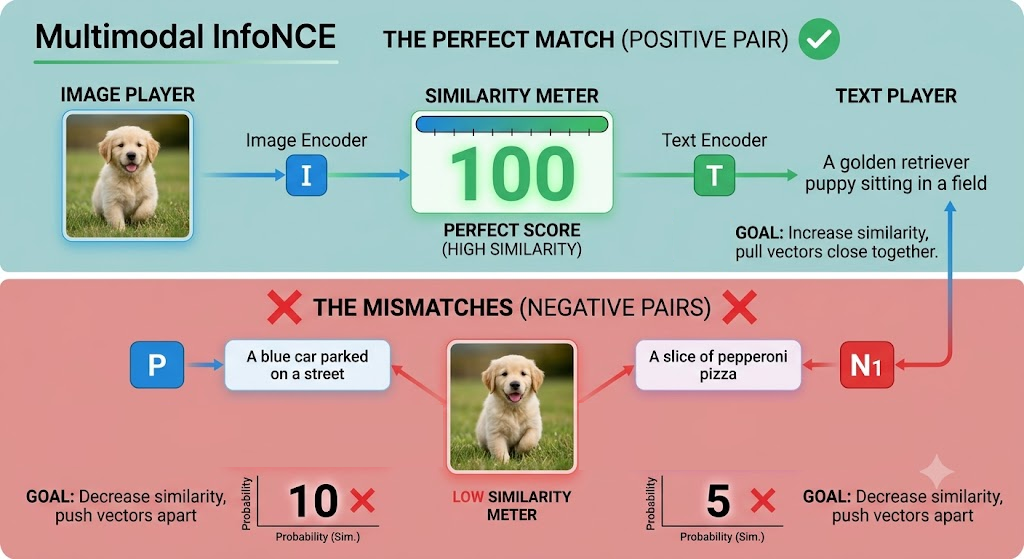
Contrastive learning has become the dominant paradigm for aligning heterogeneous modalities in multimodal large language models (MLLMs). Information Noise Contrastive Estimation (InfoNCE) Loss and its variants serve as the foundational training objectives for such models. As models scale to billions of parameters and training batches reach millions of samples, the limitations of conventional softmax-based contrastive losses have become increasingly apparent: quadratic memory growth, batch size sensitivity, semantic noise in negative sampling, and the inherent tension between alignment and uniformity. This paper presents a comprehensive survey of the evolution from InfoNCE to next-generation objectives for multimodal LLMs. We analyze the theoretical foundations of contrastive learning through the alignment-uniformity framework, examine the practical innovations that have enabled unprecedented batch scaling, and evaluate emerging alternatives including sigmoid-based losses, non-contrastive alignment methods, and hybrid generative-discriminative objectives.
- 0
- 12
- 4 min read
Deep Learning
Large Language Model
Mixture of Experts
peft
Continuously Learning Large Language Models
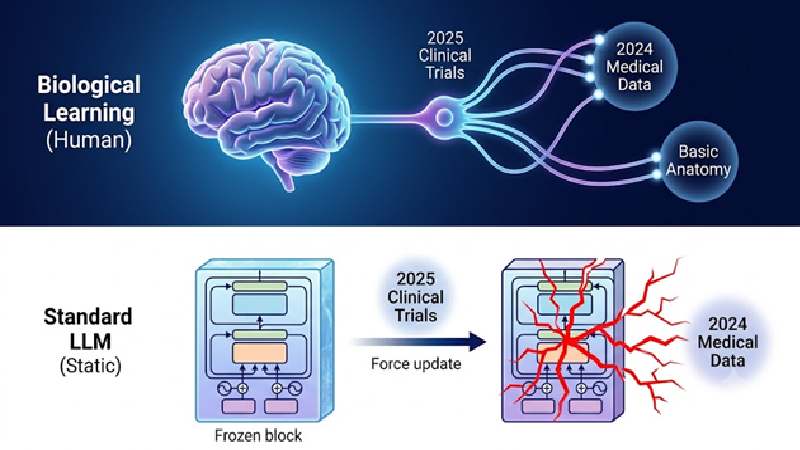
Large language models (LLMs) have achieved remarkable performance across diverse tasks, yet they remain fundamentally static: once trained, their knowledge is frozen, unable to adapt to evolving information, emerging domains, or shifting user needs without expensive retraining. This limitation - catastrophic forgetting - has become a critical bottleneck as LLMs transition from research artifacts to living systems deployed in dynamic real-world environments. This paper presents a comprehensive survey and unified framework for continuously learning LLMs (CL-LLMs), organizing the field into five complementary paradigms: replay-based methods, regularization-based approaches, parameter-efficient adaptation, architectural isolation, and inference-time continual learning.
- 0
- 47
- 3 min read
Hardware
inference endpoints
sovereign-ai
Mapping Sovereign AI Models to Sovereign Inference Chips: A Model-Driven Co-Design Framework
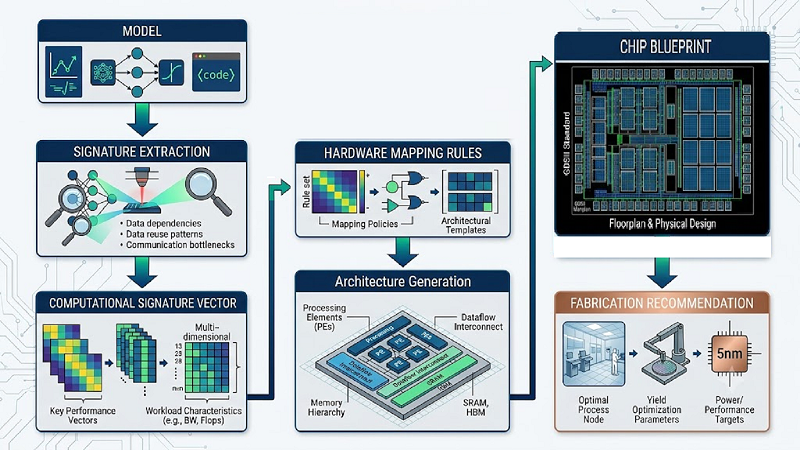
The proliferation of sovereign large language models (LLMs) trained on indigenous languages, cultural contexts, and national datasets has created an urgent need for inference hardware that preserves the unique characteristics of these models while achieving deployment efficiency. Unlike generic AI accelerators optimized for English-centric transformer models, sovereign inference chips must handle multilingual tokenization, mixed-script processing, sparse mixture-of-experts (MoE) architectures, and voice-first interaction patterns that dominate local language AI deployments. This paper presents a model-driven co-design framework that maps the specific computational signatures of sovereign AI models directly to custom inference chip architectures.
- 0
- 16
- 4 min read
AIkosha
FineTunedModel
lora
LoRA Adapters for Modular Sovereign AI Repositories
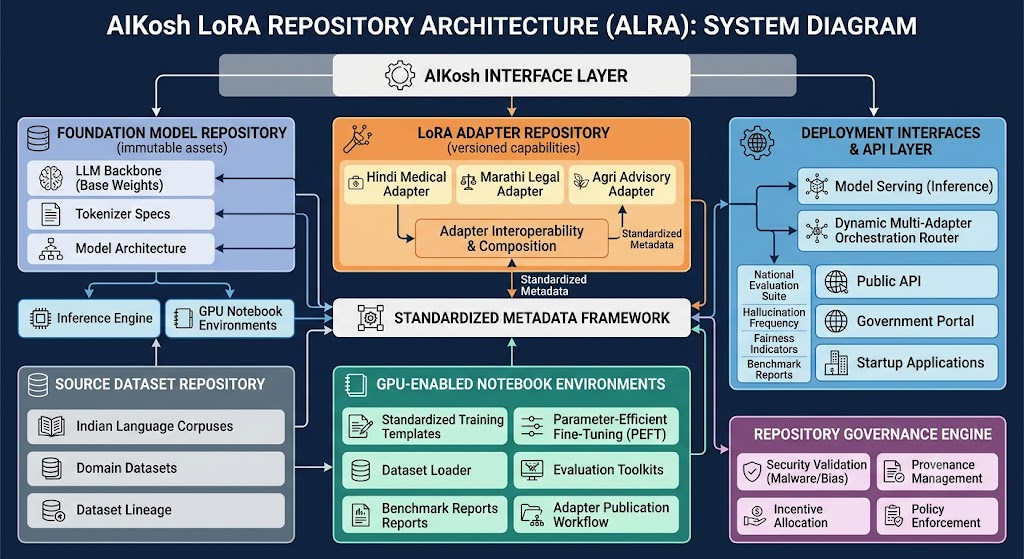
This paper proposes a comprehensive framework for integrating LoRA adapters into sovereign AI repositories such as AIKosh. Instead of treating each domain-specific model as an independent artifact, the proposed architecture stores foundation models separately from lightweight LoRA adapters, enabling modular deployment, efficient storage, rapid domain adaptation, and improved model governance. The paper introduces a repository architecture supporting adapter versioning, standardized metadata, benchmarking, interoperability, GPU-enabled training workflows, and community-driven evaluation. It discusses the role of LoRA repositories in strengthening AI sovereignty by enabling country-specific AI capabilities to be developed, shared, and continuously improved without duplicating large foundation models. The proposed framework has the potential to reduce computational costs, democratize AI development for startups and academic institutions, encourage collaborative innovation, and establish AIKosh as a national ecosystem for modular AI capability development.
- 0
- 14
- 2 min read
AI Research
computer vision
deepfake
Deep Learning
GAN Training
indian-ai
indian deepfake detection
safety
Deepfakes in India: Why Detection is Harder Than You Think
Deepfake detection looks solved on paper. 0.98 AUC on FaceForensics++. Then 0.65 on Celeb-DF. That gap is the real story. This article breaks down why passive detection fails across datasets, why diffusion-generated fakes are structurally harder to catch than GAN-based ones, and what India's new IT Rules 2026 demand from platforms technically. It also maps the open problems: cross-dataset generalisation, compression robustness, and the complete absence of Indian-face deepfake benchmarks. Written for ML practitioners, not headlines.

- 0
- 46
- 1 min read
AIkosha
Dataset
LLM Training
Dataset Distillation: Techniques, Advances, and Strategic Relevance for AIKosh
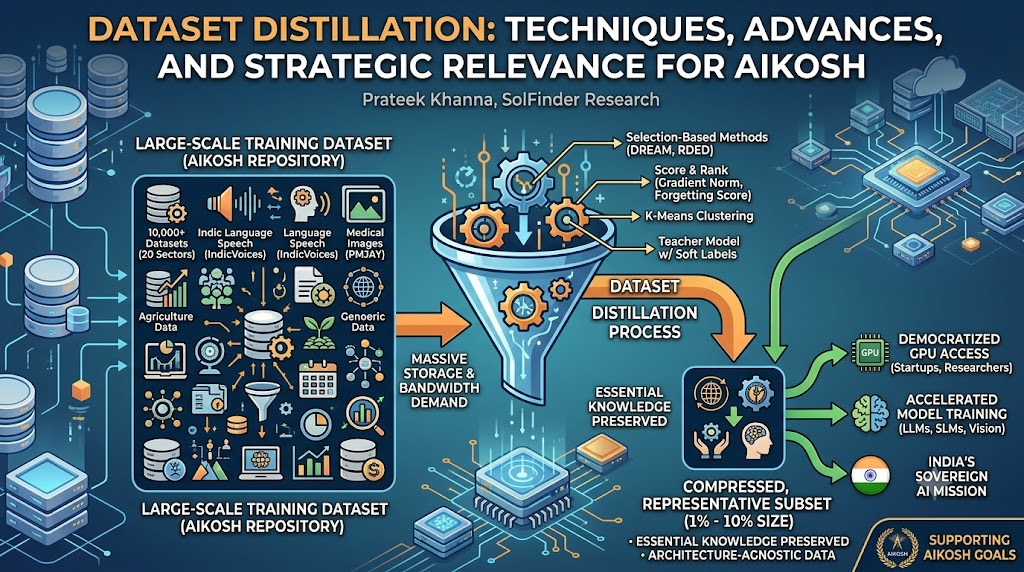
Dataset distillation is an emerging technique that compresses large-scale training datasets into small, informative synthetic or selected subsets while preserving the essential knowledge required for training high-performing machine learning models. This paper analyses the techniques in dataset distillation, with a particular focus on selection-based methods, and examines how these techniques can address AIKosh’s core challenges related to efficient storage, reduced computational costs, cross-architecture generalization, and democratized access to high-quality training data. The research proposes that integrating dataset distillation into AIKosh’s ecosystem can help accelerate India’s sovereign AI mission by enabling resource-constrained researchers and startups to train competitive models on compressed, representative data.
- 0
- 42
- 2 min read
Language
Language Access
Language Documentation
Northeast India
Northeast India Languages
Tribal Language Model
Building Sovereign Language AI for Northeast India: The NE-Stack Story
Northeast India is home to over 220 languages spoken by 45 million people, yet remains mostly absent from modern AI systems. MWire Labs, a northeast India AI startup based in Shillong, Meghalaya, is building the NE-Stack, a foundational suite of northeast AI models covering speech recognition, machine translation, OCR, TTS, and vision-language understanding across 11+ indigenous languages. This article documents the technical and strategic approach behind northeast AI development for one of the world's most linguistically diverse and digitally underserved regions.

- 1
- 10
- 1 min read
Digital Twins
Foundation Models
sovereign-ai
From Foundation Models to World Models: Charting the Next Frontier of India's AI Ecosystem
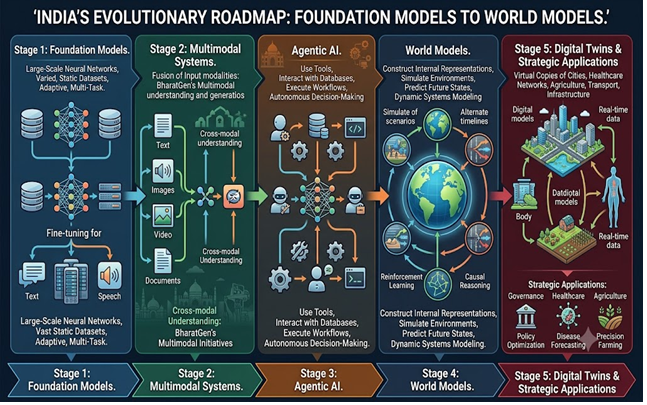
The emergence of foundation models has transformed artificial intelligence (AI) into a foundational digital infrastructure capable of supporting a wide range of applications involving language processing, computer vision, speech recognition, and multimodal interaction. India's sovereign AI initiatives, including the IndiaAI Mission, BharatGen, AIKosh, and the PARAM family of models, have established important building blocks for indigenous AI development. We are now poised for exploring beyond foundation models toward world models - AI systems capable of constructing internal representations of environments, simulating future states, reasoning about consequences, and supporting autonomous decision-making. This paper examines the transition from foundation models to world models and analyzes its implications for India's AI ecosystem. It argues that world models represent the logical next stage in the evolution of sovereign AI infrastructure and could enable transformative applications in governance, healthcare, agriculture, urban planning, scientific discovery, and digital public infrastructure. The paper further proposes a strategic roadmap through which IndiaAI can evolve from a model-centric ecosystem toward a simulation-driven AI ecosystem supported by digital twins, agentic systems, and domain-specific world models. Such a transition has the potential to position India at the forefront of next-generation artificial intelligence while strengthening technological sovereignty and national innovation capacity.
- 1
- 37
- 2 min read
AIkosha
Foundation Models
sovereign-ai
Managing Model Proliferation in Sovereign AI Ecosystems: Lessons from global AI Repositories for Indian context
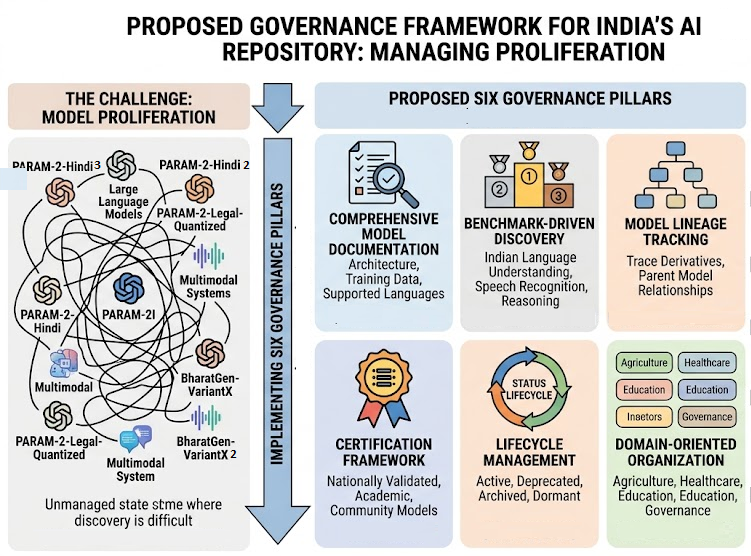
The rapid growth of foundation models tends to transform artificial intelligence (AI) repositories from simple storage platforms into complex ecosystems supporting model development, distribution, benchmarking, and deployment. As sovereign AI initiatives gain momentum worldwide, national repositories such as AIKosh under India's IndiaAI Mission are expected to host a rapidly expanding collection of datasets, foundation models, fine-tuned variants, adapters, benchmarks, and domain-specific AI systems. While this expansion can accelerate innovation, it also introduces the challenge of model proliferation, where the increasing number of available models complicates discovery, evaluation, governance, trust, and lifecycle management. This paper examines the emerging challenge of model proliferation in sovereign AI ecosystems and analyzes how lessons from global AI model repositories can inform the governance evolution in Indian context. The paper identifies potential areas of improvement in terms of governance framework, model discovery, lineage tracking, certification mechanisms, lifecycle management, and domain-oriented organization. The study argues that proactive governance will be essential to ensure that Indian AI model repositories remains transparent, trustworthy, discoverable, and aligned with India's sovereign AI objectives.
- 0
- 16
- 2 min read
IndicSynth
LLM
SyntheticData
IndicSynth: Building Synthetic Data for India's AI
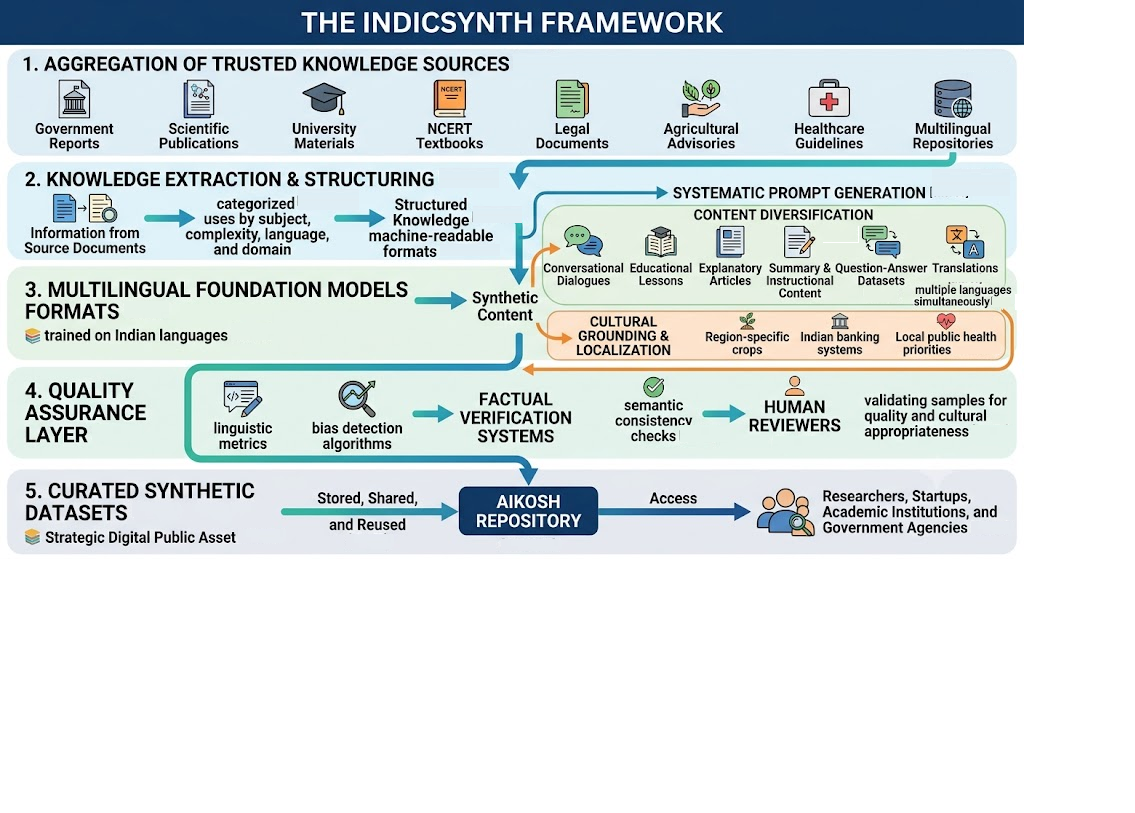
The emergence of Large Language Models (LLMs) has transformed the global artificial intelligence landscape by enabling machines to understand, generate, and reason over human language with unprecedented capabilities. However, the development of high-performing LLMs depends heavily on the availability of large volumes of high-quality training data. While English and a few other major global languages benefit from extensive digital corpora, many Indian languages remain significantly underrepresented in existing datasets. This disparity poses a major challenge for the development of inclusive and linguistically diverse AI systems capable of serving India's multilingual population. Synthetic data generation has recently emerged as a promising approach to address data scarcity while reducing dependence on costly and time-consuming human annotation. This article proposes IndicSynth, a conceptual framework for generating large-scale synthetic datasets tailored for Indian languages and domains. The framework envisions the integration of public knowledge repositories, domain-specific resources, multilingual foundation models, and quality assurance mechanisms to create culturally grounded and linguistically rich training corpora. The synthetic data can become a strategic digital public asset and the synthetic dataset generation framework can potentially be integrated within AIKosh to accelerate the development of sovereign Indian LLMs.
- 0
- 38
- 2 min read
AI in Law
Constitutional Law AI
Law
Machine Learning in Law
Predictive Analytics in Law
Public Awareness
Public Law AI
Urban Development
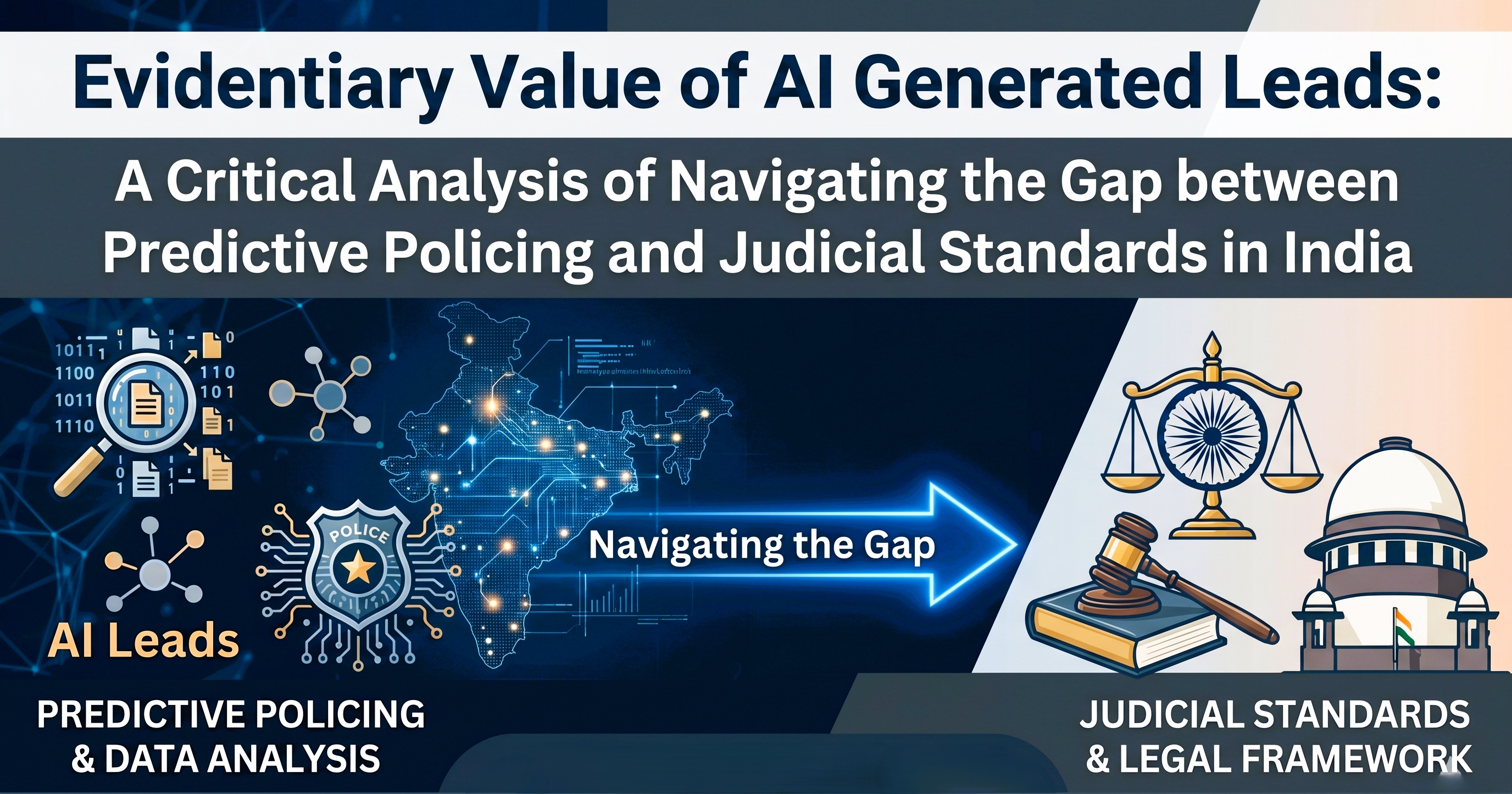
Evidentiary Value of AI Generated Leads: A Critical Analysis of Navigating the Gap between Predictive Policing and Judicial Standards in India
"Evidentiary Value of AI-Generated Leads: A Critical Analysis of Navigating the Gap between Predictive Policing and Judicial Standards in India" explores the complex intersection of modern law enforcement technology and traditional legal frameworks.
As Indian law enforcement agencies increasingly adopt predictive policing tools to anticipate crime hotspots and identify suspects, a critical legal challenge emerges: determining the admissibility, reliability and weight of AI-generated leads in a court of law. This analysis delves into the inherent tension between the fast paced, probabilistic nature of algorithmic outputs and the rigorous, concrete evidentiary standards required by Indian jurisprudence.
Key themes addressed include:
1. The Black Box Dilemma: Examining how the lack of transparency in proprietary AI algorithms complicates traditional cross examination and challenges the fundamental right to a fair trial.
2. Constitutional Concerns: Assessing the impact of AI-driven policing on civil liberties, particularly concerning the Right to Privacy, data protection and potential algorithmic bias that could disproportionately target marginalized communities.
3. Evidentiary Thresholds: Analyzing how AI leads fit into existing Indian evidentiary laws (such as the Bharatiya Sakshya Adhiniyam) and the procedural safeguards required to transition an algorithmic prediction into legally admissible evidence.
This analysis seeks to bridge the widening gap between technological innovation in law enforcement and strict judicial safeguards. It aims to propose frameworks that ensure AI serves as an effective investigative aid while strictly upholding the principles of transparency, accountability and justice in India.
- 1
- 25
- 1 min read
Can't find what you're looking for?
Showing
Select Option
12
of 17 items
© 2026 - Copyright AIKosh. All rights reserved.