
Government Of India
A-
A
A+

Latest insights & developments from the world of Artificial Intelligence(AI).

llama.cpp
Vision Benchmark
vllm
Cost of Accuracy vs Thoroughput
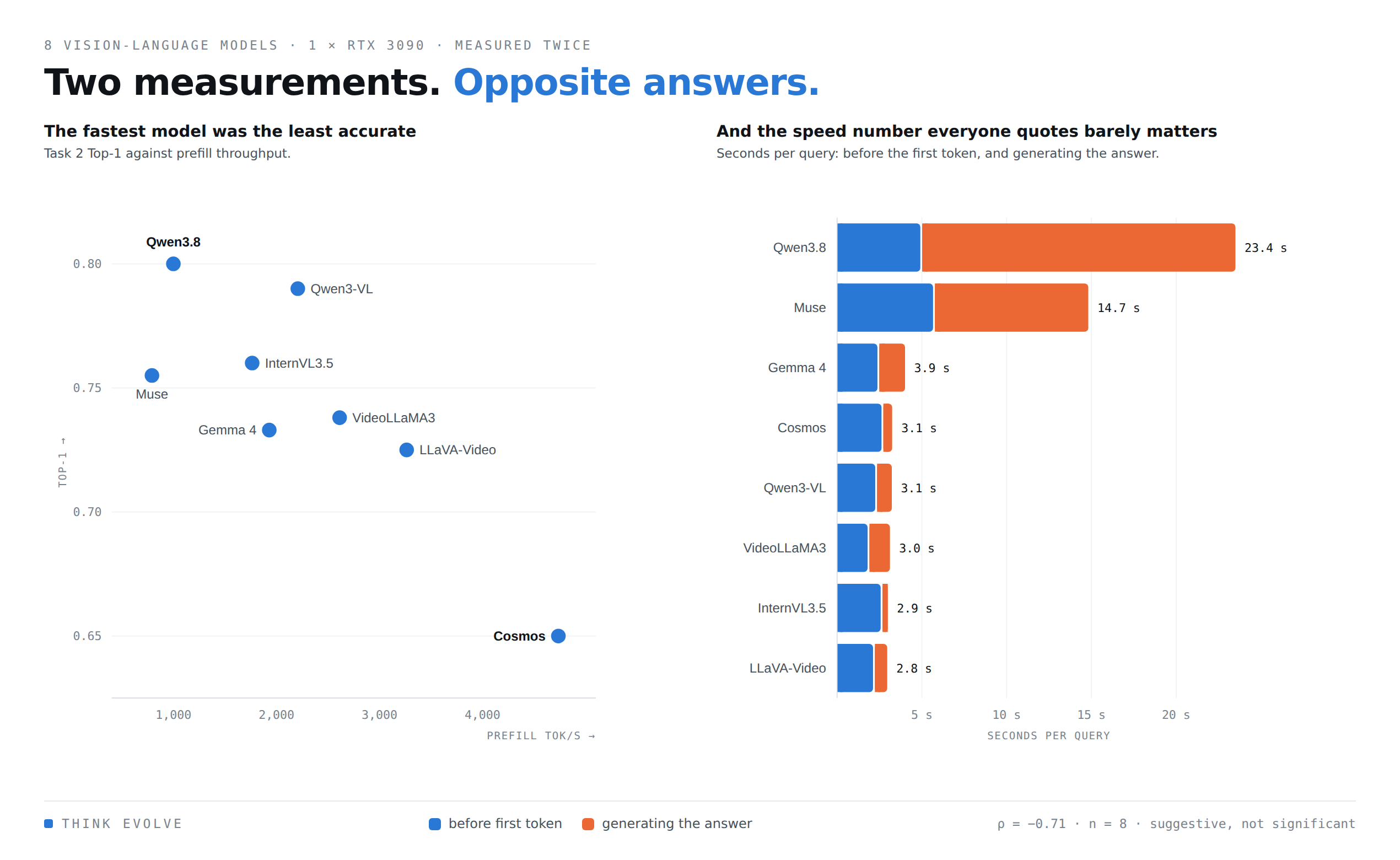
Most teams choose a model using two numbers that were measured separately and never reconciled: a quality score and a tokens-per-second figure. This paper joins them. We measured eight vision-language models twice — ranking accuracy against ground truth, and prefill and decode throughput on real queries — on a single 24GB RTX 3090, one model at a time. The two measurements rank the fleet in near-opposite orders, and most of that turns out to be parameter count rather than a capability trade-off. What survives is more useful: decode throughput measures your serving configuration rather than your model, short structured outputs are almost entirely prefill-bound, and per-request speed can invert against per-job cost by a factor of two and a half. 28 pages, full method, four instrumentation defects we caught before trusting any number, and an extended set of caveats.
 0
0  2
2  2 min read


AI for Governance
computer vision
Digital Transformation
food security
procurement
AI-Powered Image Validation in PCSAP: Enhancing Transparency and Efficiency in India’s Grain Procurement Syste
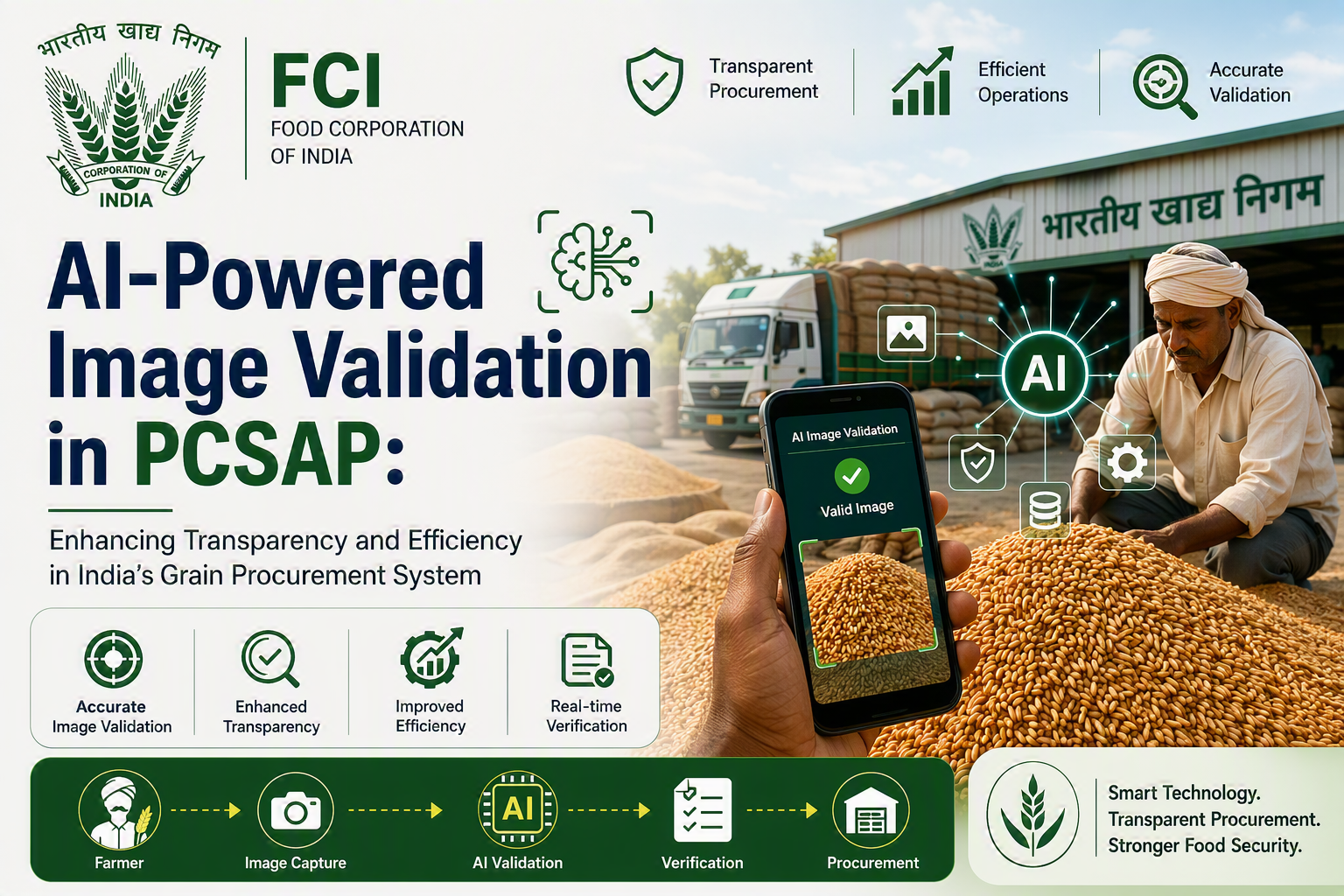
This article highlights how AI-powered image validation in PCSAP is improving India’s grain procurement monitoring system. With thousands of procurement centers and nearly 14 lakh photographs uploaded every season, manual verification had become difficult and time-consuming. The AI system validates images in real time by checking location, timestamp, quality, duplication, and content relevance. This helps improve transparency, reduce manual effort, enhance data accuracy, and support faster decision-making in procurement center assessments. The solution has been piloted in Punjab, Haryana, and Odisha, with potential for wider use in government monitoring and compliance programs.
- 0
- 27
- 1 min read
Conversational AI agents
engineering
Research Papers
software
Agentic Code Surgery: A Safer Way to Use AI Coding Assistants on Brownfield Software
AI coding assistants are impressive on greenfield projects, but most real-world engineering happens inside brownfield systems: legacy codebases with weak tests, hidden dependencies, and accumulated complexity. This article introduces “Agentic Code Surgery,” a seven-agent workflow that helps AI assistants change such systems safely by first understanding behavior, identifying seams, creating characterization tests, and only then implementing changes. The paper is attached for readers who want the full method, experiment, and evidence.

- 0
- 89
- 2 min read
AI For All
AI for Social Good
Artificial Intelligence
Bharat
Content Creation
Ethical AI
MeitY
Synthetic Data
vikasit-ai
When India Spoke of Digital Authenticity: A Digital Nutrition Label for Provenance
At India AI Impact Summit 2026, digital authenticity emerged as a public responsibility connected to synthetic media, platform accountability, and citizen trust. Prime Minister Narendra Modi’s call for authenticity labels placed the issue in language ordinary people can understand: citizens need readable trust, not only raw manifests or expert tools.
The same summit also placed C2PA and Content Credentials inside the standards conversation, with leaders from Adobe, Google, MeitY, and the wider technology ecosystem discussing provenance, synthetic media, and accountability. C2PA Content Credentials provide the open standards foundation for making provenance inspectable across the global content ecosystem.
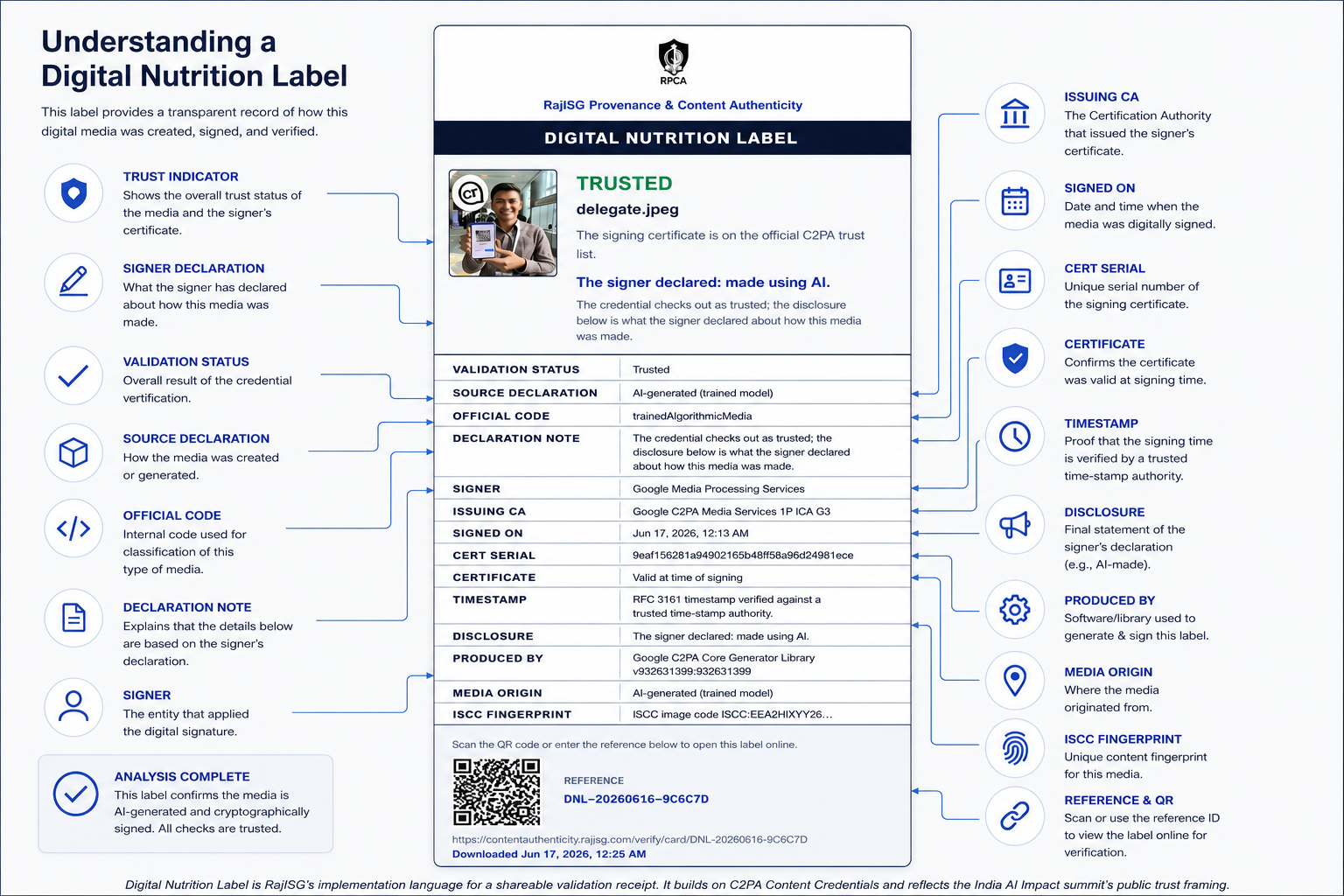
This Experts Speak article reflects on the next implementation challenge: how verified provenance becomes readable and useful after inspection. From RajISG’s perspective, it examines how a live Digital Nutrition Label implementation on RPCA can translate validated Content Credentials into a citizen readable receipt with verdict, disclosure rows, QR code, reference number, and frozen snapshot reopening on the live site.
The article argues that global responsibility in digital trust requires both open standards and implementation layers that help citizens, creators, institutions, and platforms actually use provenance in public life.
- 0
- 44
- 1 min read
AI evaluation
AI/ML Development
DPDP
multi-agent
responsible AI
From Gateway to Control Plane: Governing Agentic AI in India's Regulated Sectors
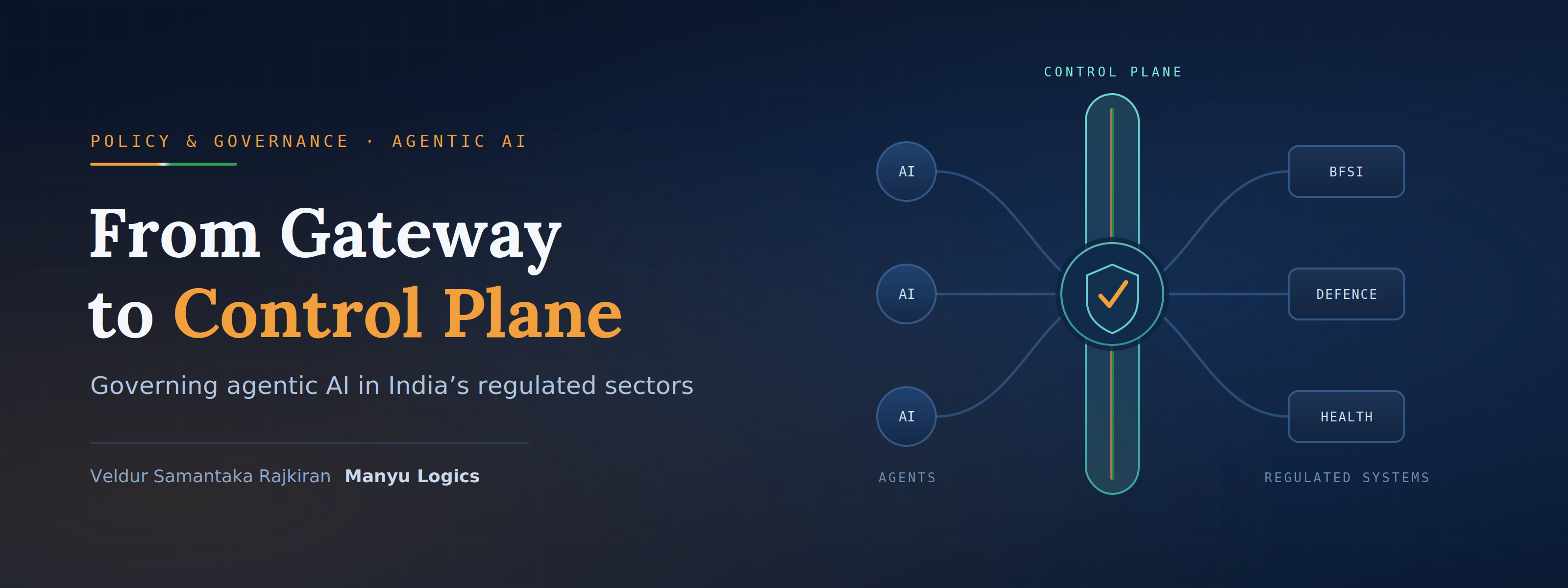
Our first article argued that India's enterprise AI governance challenge begins at the gateway — redacting Indian PII before data reaches a model. Agentic AI moves the harder problem one layer out: AI agents no longer just read data, they take actions — they file, transfer, query, and escalate across enterprise systems. The governance surface shifts from what a model sees to what an agent is allowed to do, and whether you can prove it afterwards.
This follow-up examines why the Model Context Protocol (MCP) — now stewarded by the Linux Foundation's Agentic AI Foundation and adopted across every major AI platform — is becoming the de facto control plane for enterprise AI, and why governing that control plane is structurally different for regulated India. We map the agentic risk surface (tool over-exposure, prompt injection, tool poisoning, schema drift) onto three Indian realities: the Data Fiduciary's continuing liability for autonomous agent actions under the DPDP Rules 2025, RBI's FREE-AI sutras of Accountability and Understandable-by-Design, and the sovereignty question of whether a regulated institution's AI nervous system should run on foreign SaaS.
We then specify what a sovereign, audit-ready agentic control plane must do — self-deployable, redact-before-tool-call, least-privilege per tool, deterministic policy enforcement, and immutable audit artefacts mapped to Indian regulation — and close with five recommendations for MeitY, RBI, and the IndiaAI Mission. With DPDP hard enforcement arriving in May 2027, the window to build India's own control plane is now.
- 0
- 11
- 1 min read
Agriculture Statistics
AI in Agriculture
Digital Transformation
Multilingual AI
Public Sector AI
Responsible AI
AI-Powered Multilingual Advisory Platform for Smallholder Farmers: Lessons from a Public Sector Digital Transformation Project in India
This solution write-up documents the design, development, and deployment of a multilingual AI-powered advisory platform that delivers personalized crop recommendations, pest alerts, weather insights, and government scheme information to smallholder farmers. Implemented as part of a district-level digital transformation initiative, the system bridges the information gap for farmers in regional languages, demonstrating measurable improvements in decision-making, yield awareness, and scheme uptake while upholding responsible AI principles

- 0
- 28
- 1 min read
agentic
indian-ai
AI Agent Architecture: The Trust Boundary Model
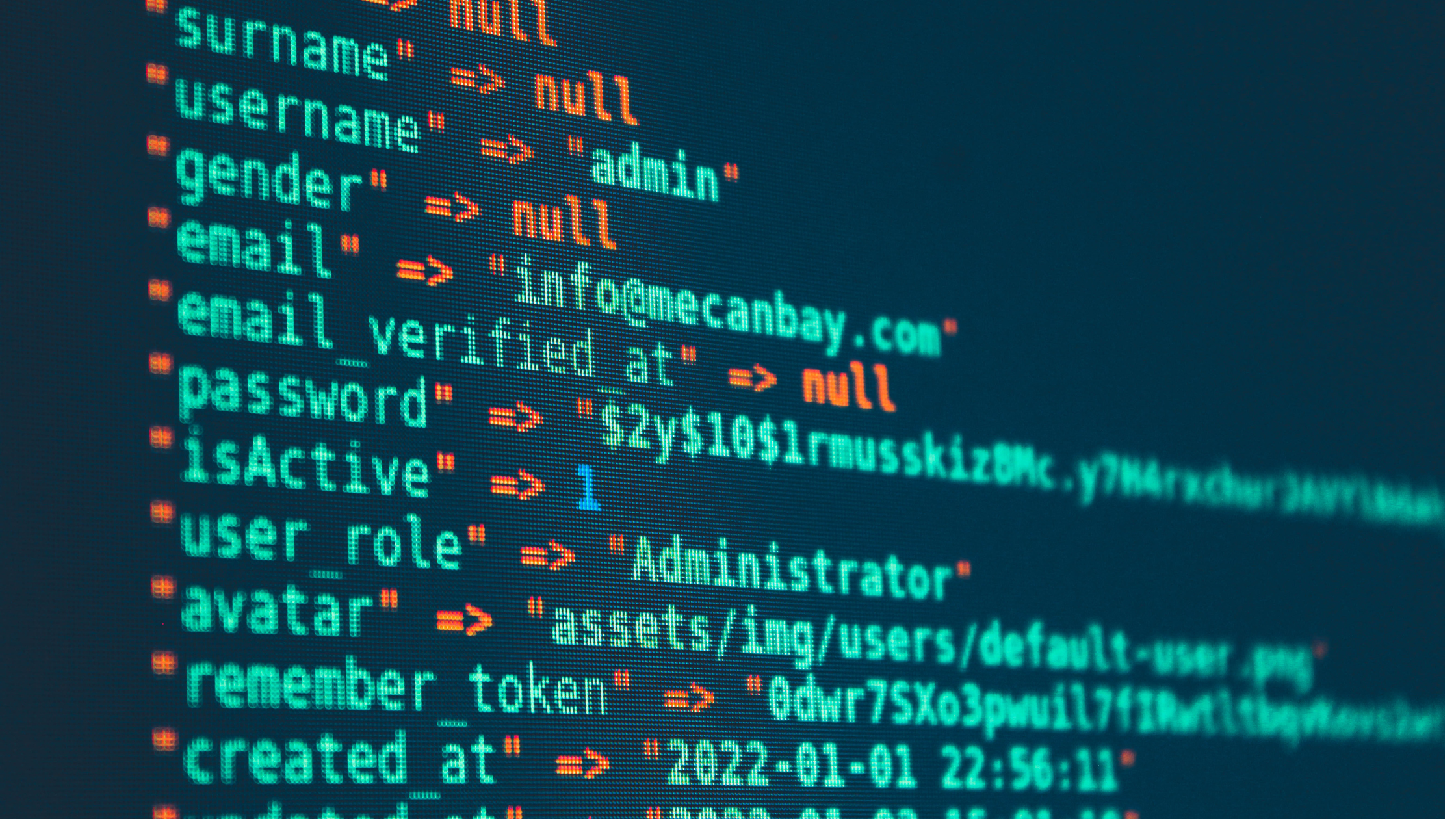
The blog introduces the Agent Trust Boundary Model, a framework for safely architecting AI agents around four core boundaries: what the agent can follow (instructions), read (data), call (tools), and change (actions), plus supporting boundaries for memory, state, identity, and observability. Its central principle is that untrusted content (emails, webpages, tickets, tool outputs) may inform the agent but must never carry authority — otherwise prompt injection and "authority confusion" turn demos into production risks. It argues agents differ from chatbots because they act, so they need scoped tools, approval gates for high-impact actions, and full audit logging. The takeaway: a production-grade agent isn't just a prompt but a runtime system that must be constrained by architecture.
- 0
- 12
- 3 min read
artificial intelligence
Data Privacy
Policy and Governance
Responsible AI
PII in the Age of Agentic AI: Why India's Enterprise AI Gateway Problem is Structurally Different
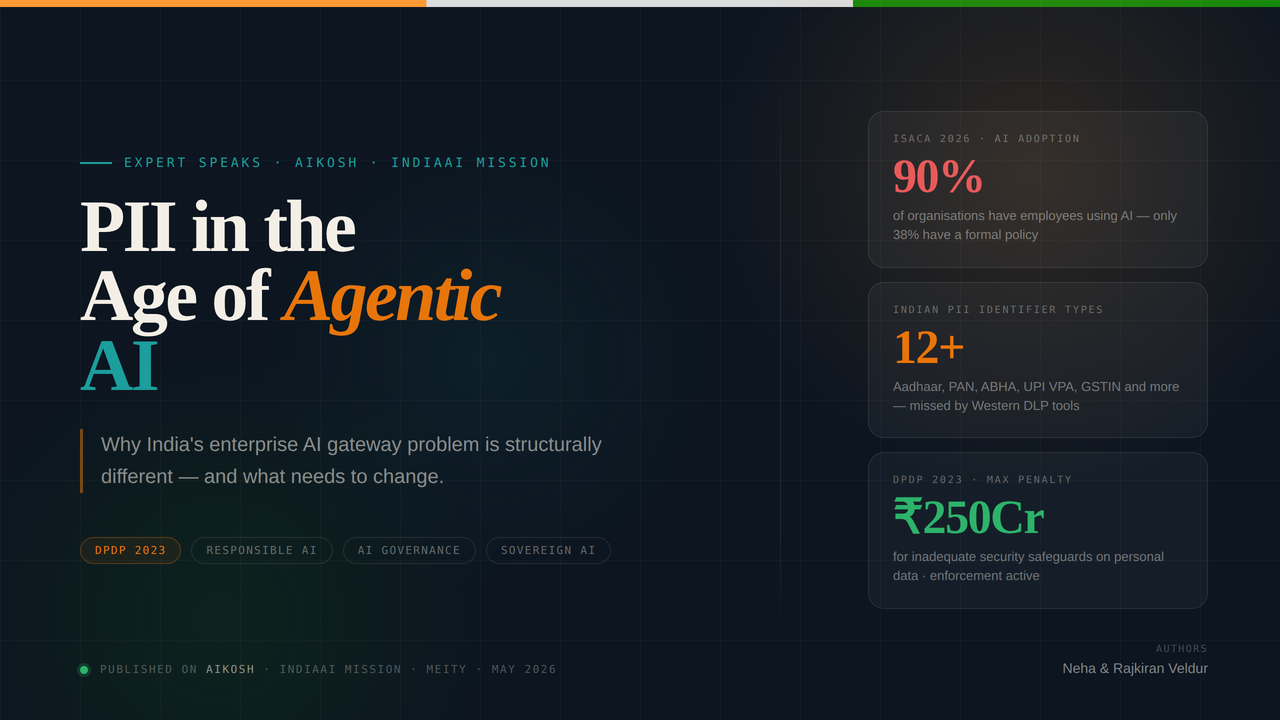
India's enterprise AI governance challenge is structurally different from Western contexts. This article documents why: 12 Indian PII formats that Western DLP tools miss, DPDP 2023 obligations that differ materially from GDPR, and the architectural requirements of an Enterprise AI Gateway for regulated sectors. We examine how agentic AI escalates the governance challenge, and propose five policy recommendations for MeitY, RBI, and DPIIT to close India's AI governance gap.
- 0
- 13
- 1 min read
AI in Agriculture
computer vision
drone technology
Machine Learning
Precision Agriculture
AI in agriculture in 2025: Transforming Indian farms for a sustainable future
India's agricultural sector is being transformed by AI, with the global AI in agriculture market projected to grow at 23.1% CAGR, reaching USD 4.7 billion by 2028. AI tools enable precision farming, crop disease detection, automated weed control, and livestock monitoring. Government initiatives like Kisan e-Mitra Chatbot and AI Centres of Excellence are accelerating adoption across Indian farms.

- 0
- 39
- 1 min read
Big Data
Government Policy
High Performance Computing
Supercomputing
AIRAWAT: A landmark in India’s AI supercomputing journey
India's AI supercomputer AIRAWAT, installed at C-DAC Pune, ranks No. 75 globally in the Top 500 Supercomputing List. With a peak performance of 13,170 teraflops and 200 AI petaflops, it is India's largest and fastest AI supercomputing system. Funded by MeitY, AIRAWAT supports AI research across healthcare, agriculture, NLP, defence, and education, driving India's technological self-reliance.
- 0
- 12
- 1 min read
AI Models
Domain Specific AI
LLM
Telecommunications
Exploring Telecom-Specific Large Action Model TSLAM-4b
TSLAM-4B is the first LLM specifically designed for the telecommunications industry, developed by NetoAI. With 4 billion parameters, 128K token context length, and trained on 427 million telecom-specific tokens, it enables network troubleshooting, infrastructure planning, customer support automation, and regulatory compliance, setting a new benchmark for domain-specific AI in telecom.

- 0
- 4
- 1 min read
AI for fraud detection
AI Models
fintech
RBI's AI initiative MuleHunter.ai: AI solution to tackle digital fraud in India
The Reserve Bank Innovation Hub (RBIH) has developed MuleHunter.AI, an AI/ML-powered tool to detect mule accounts used in financial fraud. Analysing 19 behavioural patterns across banking data, it outperforms traditional rule-based detection methods. Successfully piloted with two public sector banks, it aims for wider rollout to secure India's digital financial ecosystem.

- 0
- 9
- 1 min read
Can't find what you're looking for?
Showing
Select Option
12
of 12 items
© 2026 - Copyright AIKosh. All rights reserved.