
Government Of India
A-
A
A+

Latest insights & developments from the world of Artificial Intelligence(AI).

Agentic AI
AI Agent Security
AI Automation
AI Governance
AI Monitoring
AI ObservabAI Governance
AI Observability
AI Permissions
AI Security
Conversational AI agents
Enterprise AI
Enterprise Automation
Enterprise Automationility
Human-in-the-Loop AI
AI Agents in Enterprise: Designing for Permissions, Monitoring and Human Control
AI agents are moving from answering questions to taking real actions inside enterprise systems. This article explains how businesses can design safer AI agents with the right permissions, monitoring, policy checks, and human oversight, so agents can act autonomously while keeping critical decisions under control.

 0
0  4
4  1 min read


llama.cpp
Vision Benchmark
vllm
Cost of Accuracy vs Thoroughput
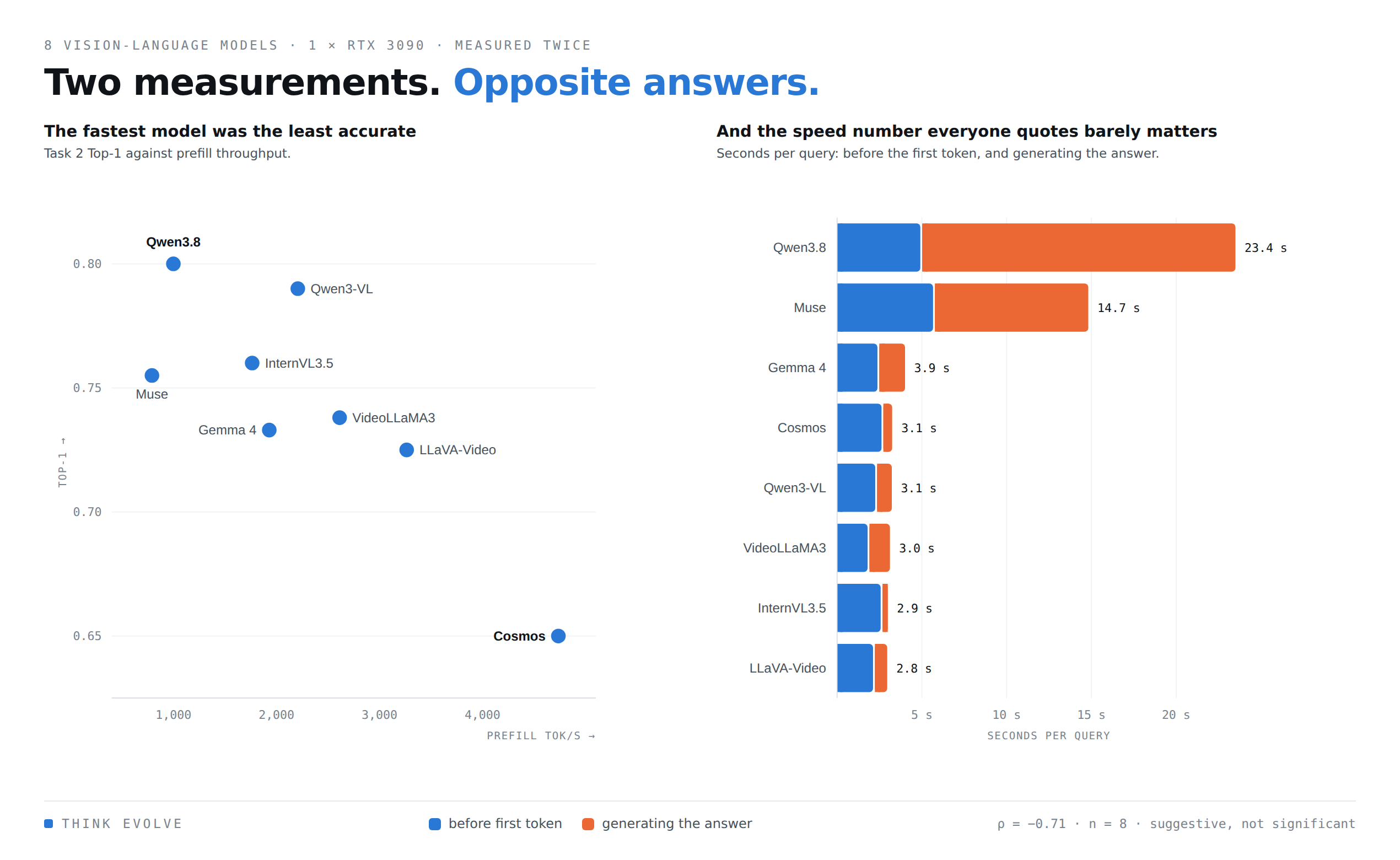
Most teams choose a model using two numbers that were measured separately and never reconciled: a quality score and a tokens-per-second figure. This paper joins them. We measured eight vision-language models twice — ranking accuracy against ground truth, and prefill and decode throughput on real queries — on a single 24GB RTX 3090, one model at a time. The two measurements rank the fleet in near-opposite orders, and most of that turns out to be parameter count rather than a capability trade-off. What survives is more useful: decode throughput measures your serving configuration rather than your model, short structured outputs are almost entirely prefill-bound, and per-request speed can invert against per-job cost by a factor of two and a half. 28 pages, full method, four instrumentation defects we caught before trusting any number, and an extended set of caveats.
- 0
- 2
- 2 min read
architecture
automation
Deep learning
Neural Networks
Neural Architecture Search : Principles, Algorithms, Applications and Future Directions
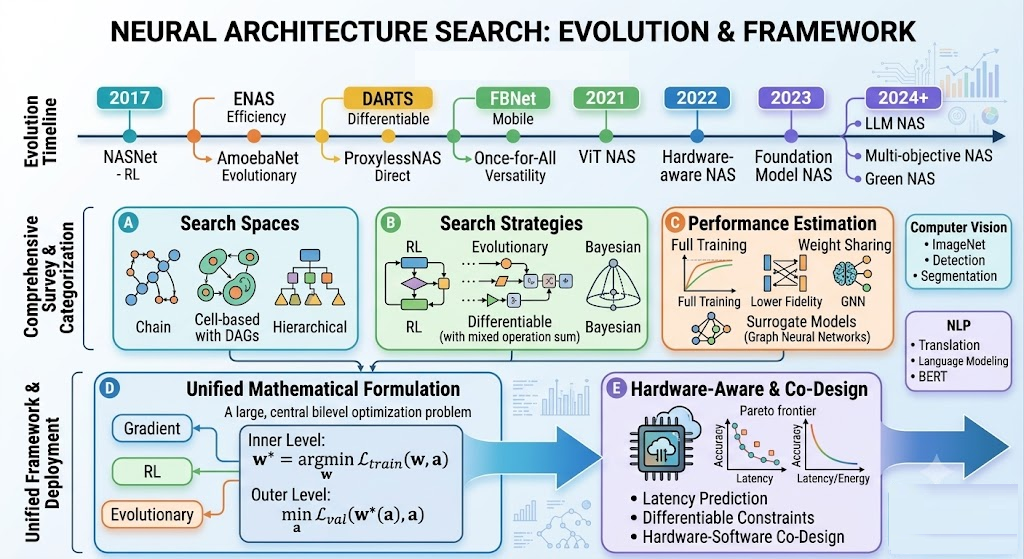
Neural Architecture Search has emerged as a transformative paradigm for automating the design of deep neural networks, reducing the reliance on human expertise and enabling the discovery of architectures that often surpass manually designed counterparts. This paper presents a comprehensive survey of NAS methodologies, tracing the evolution from early reinforcement learning-based and evolutionary approaches to modern differentiable and one-shot methods. The paper systematically categorizes NAS techniques along three fundamental dimensions: search space design, search strategy, and performance estimation. A unified mathematical framework is introduced that encompasses gradient-based, reinforcement learning-based, and evolutionary NAS under a common optimization objective.
- 0
- 117
- 2 min read
ContrastiveLearning and ZeroShotClassification
CrossModal and ContrastiveLearning
LLM
Multimodal AI
InfoNCE and Beyond: The Evolution of Multimodal Representation Learning
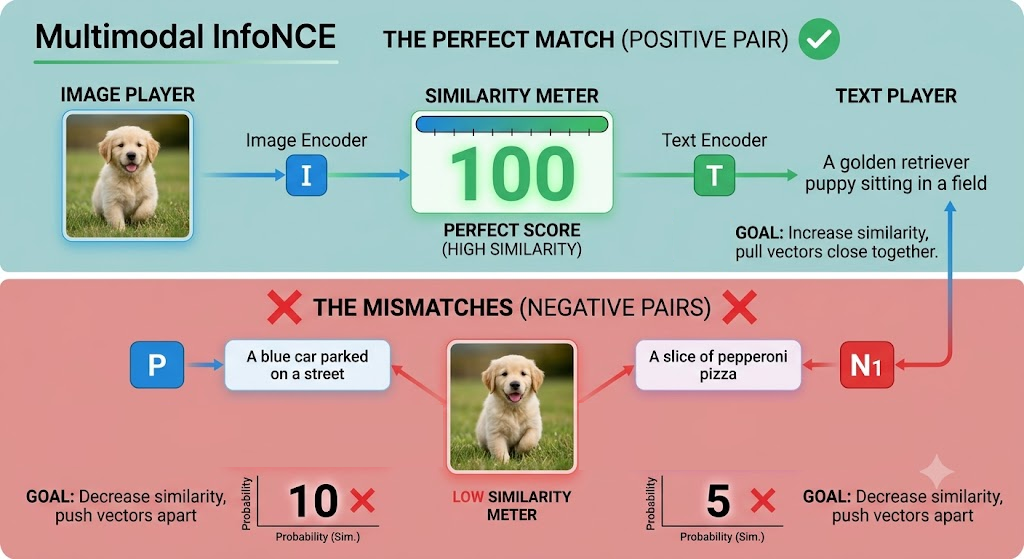
Contrastive learning has become the dominant paradigm for aligning heterogeneous modalities in multimodal large language models (MLLMs). Information Noise Contrastive Estimation (InfoNCE) Loss and its variants serve as the foundational training objectives for such models. As models scale to billions of parameters and training batches reach millions of samples, the limitations of conventional softmax-based contrastive losses have become increasingly apparent: quadratic memory growth, batch size sensitivity, semantic noise in negative sampling, and the inherent tension between alignment and uniformity. This paper presents a comprehensive survey of the evolution from InfoNCE to next-generation objectives for multimodal LLMs. We analyze the theoretical foundations of contrastive learning through the alignment-uniformity framework, examine the practical innovations that have enabled unprecedented batch scaling, and evaluate emerging alternatives including sigmoid-based losses, non-contrastive alignment methods, and hybrid generative-discriminative objectives.
- 0
- 12
- 4 min read
Deep Learning
Large Language Model
Mixture of Experts
peft
Continuously Learning Large Language Models
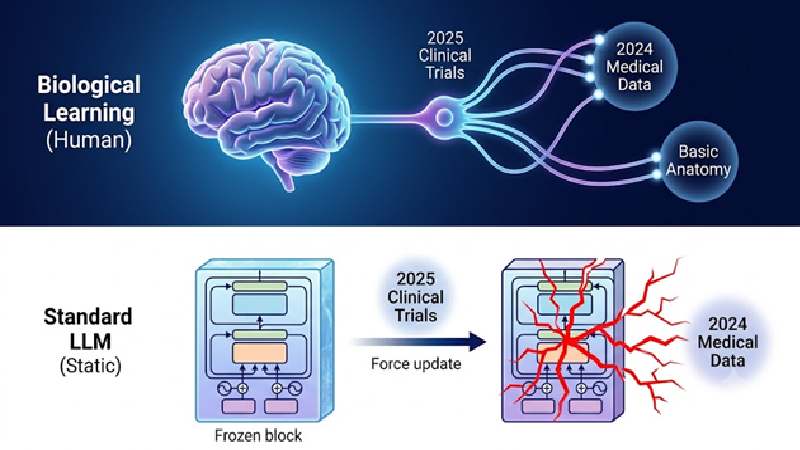
Large language models (LLMs) have achieved remarkable performance across diverse tasks, yet they remain fundamentally static: once trained, their knowledge is frozen, unable to adapt to evolving information, emerging domains, or shifting user needs without expensive retraining. This limitation - catastrophic forgetting - has become a critical bottleneck as LLMs transition from research artifacts to living systems deployed in dynamic real-world environments. This paper presents a comprehensive survey and unified framework for continuously learning LLMs (CL-LLMs), organizing the field into five complementary paradigms: replay-based methods, regularization-based approaches, parameter-efficient adaptation, architectural isolation, and inference-time continual learning.
- 0
- 47
- 3 min read
Hardware
inference endpoints
sovereign-ai
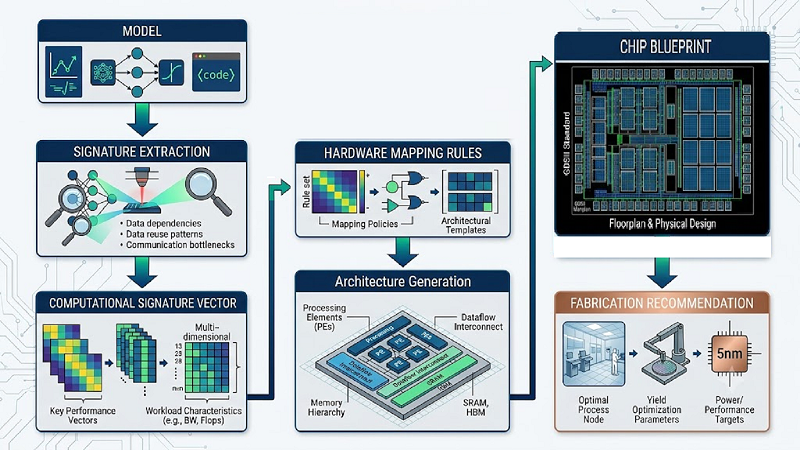
Mapping Sovereign AI Models to Sovereign Inference Chips: A Model-Driven Co-Design Framework
The proliferation of sovereign large language models (LLMs) trained on indigenous languages, cultural contexts, and national datasets has created an urgent need for inference hardware that preserves the unique characteristics of these models while achieving deployment efficiency. Unlike generic AI accelerators optimized for English-centric transformer models, sovereign inference chips must handle multilingual tokenization, mixed-script processing, sparse mixture-of-experts (MoE) architectures, and voice-first interaction patterns that dominate local language AI deployments. This paper presents a model-driven co-design framework that maps the specific computational signatures of sovereign AI models directly to custom inference chip architectures.
- 0
- 16
- 4 min read
Cancer Care
Compendium
NCG Catch Compendium 2025
The IndiaAI–NCG CATCH Grant for Cancer 2026 compendium documents ten winning AI solutions selected through a competitive grant program jointly run by IndiaAI (MeitY) and the National Cancer Grid's Koita Centre for Digital Oncology. It profiles AI tools spanning cancer screening, diagnostics, clinical decision support, patient engagement, and operational efficiency, ranging from pilot-ready to commercially deployed systems. Each solution is evaluated against criteria including clinical relevance, technical maturity, data governance, DPDP compliance, and deployment feasibility within Indian hospital settings. The compendium also covers the selection methodology, jury composition, responsible AI principles, and key learnings from the challenge, serving as a reference for hospitals, policymakers, and innovators seeking to adopt or scale AI-enabled cancer care across India.

- 1
- 97
- 1 min read
AI for Governance
computer vision
Digital Transformation
food security
procurement
AI-Powered Image Validation in PCSAP: Enhancing Transparency and Efficiency in India’s Grain Procurement Syste
This article highlights how AI-powered image validation in PCSAP is improving India’s grain procurement monitoring system. With thousands of procurement centers and nearly 14 lakh photographs uploaded every season, manual verification had become difficult and time-consuming. The AI system validates images in real time by checking location, timestamp, quality, duplication, and content relevance. This helps improve transparency, reduce manual effort, enhance data accuracy, and support faster decision-making in procurement center assessments. The solution has been piloted in Punjab, Haryana, and Odisha, with potential for wider use in government monitoring and compliance programs.

- 0
- 27
- 1 min read
AIkosha
FineTunedModel
lora
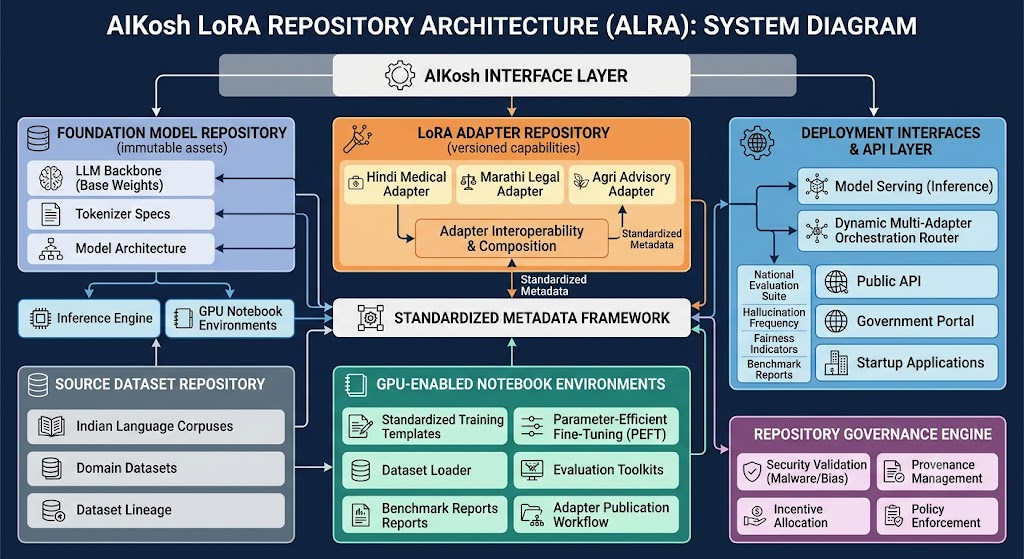
LoRA Adapters for Modular Sovereign AI Repositories
This paper proposes a comprehensive framework for integrating LoRA adapters into sovereign AI repositories such as AIKosh. Instead of treating each domain-specific model as an independent artifact, the proposed architecture stores foundation models separately from lightweight LoRA adapters, enabling modular deployment, efficient storage, rapid domain adaptation, and improved model governance. The paper introduces a repository architecture supporting adapter versioning, standardized metadata, benchmarking, interoperability, GPU-enabled training workflows, and community-driven evaluation. It discusses the role of LoRA repositories in strengthening AI sovereignty by enabling country-specific AI capabilities to be developed, shared, and continuously improved without duplicating large foundation models. The proposed framework has the potential to reduce computational costs, democratize AI development for startups and academic institutions, encourage collaborative innovation, and establish AIKosh as a national ecosystem for modular AI capability development.
- 0
- 14
- 2 min read
AI Research
computer vision
deepfake
Deep Learning
GAN Training
indian-ai
indian deepfake detection
safety
Deepfakes in India: Why Detection is Harder Than You Think
Deepfake detection looks solved on paper. 0.98 AUC on FaceForensics++. Then 0.65 on Celeb-DF. That gap is the real story. This article breaks down why passive detection fails across datasets, why diffusion-generated fakes are structurally harder to catch than GAN-based ones, and what India's new IT Rules 2026 demand from platforms technically. It also maps the open problems: cross-dataset generalisation, compression robustness, and the complete absence of Indian-face deepfake benchmarks. Written for ML practitioners, not headlines.

- 0
- 46
- 1 min read
AI
Bhashini
Digital India
geopolitics
IndiaAI
China’s Open-Source AI Surge and India’s Strategic Position in the Emerging Multipolar AI Order
The article explores how China is aggressively advancing its geopolitical influence by releasing powerful, open-source AI models, making high-tier AI capabilities freely and globally accessible.
Contrasts this with the proprietary, closed-source approaches dominated by US tech giants.
The piece analyzes India's strategic position within this shifting, multipolar AI ecosystem, arguing that India must carefully balance its infrastructure dependencies, leverage open-source breakthroughs for localized economic growth, and craft its own independent AI policies to avoid being caught in a digital duopoly between the US and China.

- 2
- 53
- 1 min read
Conversational
machine Learning
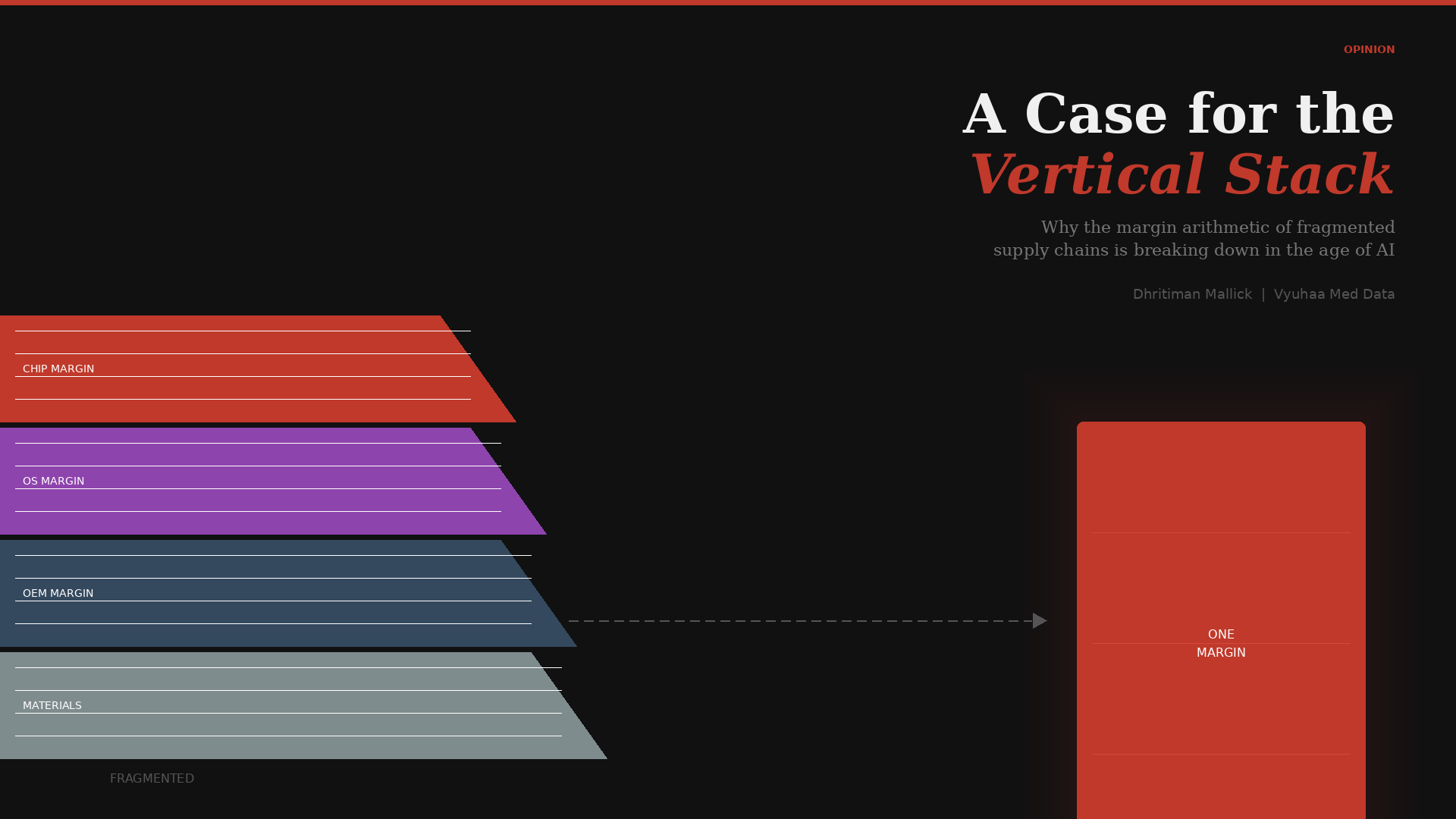
The Case for the Vertical Stack
Why owning both the silicon and the software is the only durable moat in the age of AI, and why the margin arithmetic of fragmented supply chains is finally breaking down.
By Dhritiman Mallick · Founder & CEO, Vyuhaa Med Data
- 0
- 43
- 1 min read
Can't find what you're looking for?
Showing
Select Option
12
of 47 items
© 2026 - Copyright AIKosh. All rights reserved.