



MULBERRY DATASETS OF SERICULTURE DEPARTMENT GOVERNMENT OF ANDHRA PRADESH
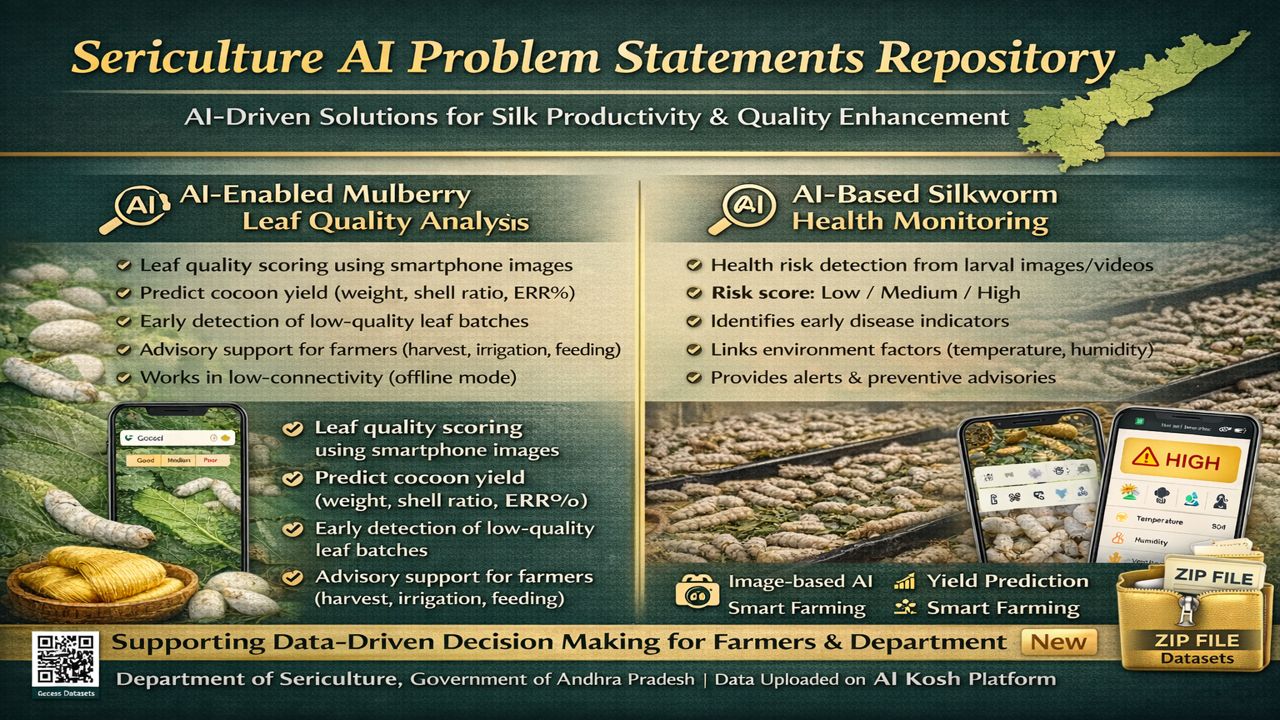
This dataset comprises mulberry leaf images, associated agronomic metadata, and linked cocoon yield outcomes collected under field conditions to support AI-based leaf quality assessment and cocoon yield prediction in sericulture.
About Dataset
The Mulberry Leaf Quality Dataset has been developed by the Department of Sericulture to facilitate data-driven approaches in improving silk productivity. Mulberry leaves serve as the primary feed for silkworms, and their quality significantly influences larval growth, survival rate, and cocoon yield. This dataset includes high-resolution smartphone images of mulberry leaves captured under field conditions along with structured metadata such as leaf variety, harvest age, plot identification, and rearing stage. Additionally, it integrates cocoon yield parameters including average cocoon weight, shell ratio, and Effective Rearing Rate (ERR%), enabling correlation analysis between leaf quality and production outcomes. The dataset supports development of machine learning models for: • Leaf quality classification (Good / Medium / Poor) • Cocoon yield prediction at batch level • Advisory generation for optimal harvesting and feeding practices It is designed to function in low-connectivity rural environments using minimal inputs, ensuring scalability and usability for field staff and farmers.
Purpose of Dataset
• To enable AI-based grading of mulberry leaf quality • To predict cocoon yield using leaf characteristics and minimal inputs • To provide actionable advisories (harvest timing, irrigation, feeding practices) • To support extension services with data-backed recommendations • To improve consistency in cocoon quality and productivity • To assist policymakers in monitoring sericulture performance
 Dataset Metadata
NA
INDIA
AgriKosh
DEPARTMENT OF SERICULTURE GOVERNMENT OF ANDHRA PRADESH

Unstructured
Static
Static
N.A.
08/04/26 08:01:53
Open
Hosted
Primary
Manual Collection
 Activity Overview
 1
1 65
65  12.66 MB
  616
616
 Tags
Tags
- Sericulture
 License Control
NA
MULBERRY DATASETS OF SERICULTURE ( 2 directories )

MULBERRY_LEAF_DATASETS
1 directories
MULBERRY_LEAF_DATASETS_2
1 directories
 Data Quality Score Beta
 Version Control
Version 1(12.66 MB)
- Arjun Rao Palukuri·6 month(s) ago
- chevron_right
MULBERRY DATASETS OF SERICULTURE
- chevron_right
MULBERRY_LEAF_DATASETS
- chevron_right
MULBERRY_LEAF_DATASETS_2
© 2026 - Copyright AIKosh. All rights reserved.